 Libzbook
Library finance
How to Close the Cash Drawer Every Day in a Study Library
A simple day-end cash routine for study libraries: work out what the drawer should hold, count it, explain any difference and record what goes to the bank.
Why the drawer rarely matches
Most study libraries still take a good share of fees in cash. During the day, money also goes out: a refund to a student who cancelled, a payment to the electrician, change for a large note. By evening, nobody is sure what the drawer should hold. If the count is short, it is too late to find out why.
A day-end cash close takes about five minutes and answers one question every evening: does the cash in the drawer match the cash that moved today?
Step 1: Work out what the drawer should hold
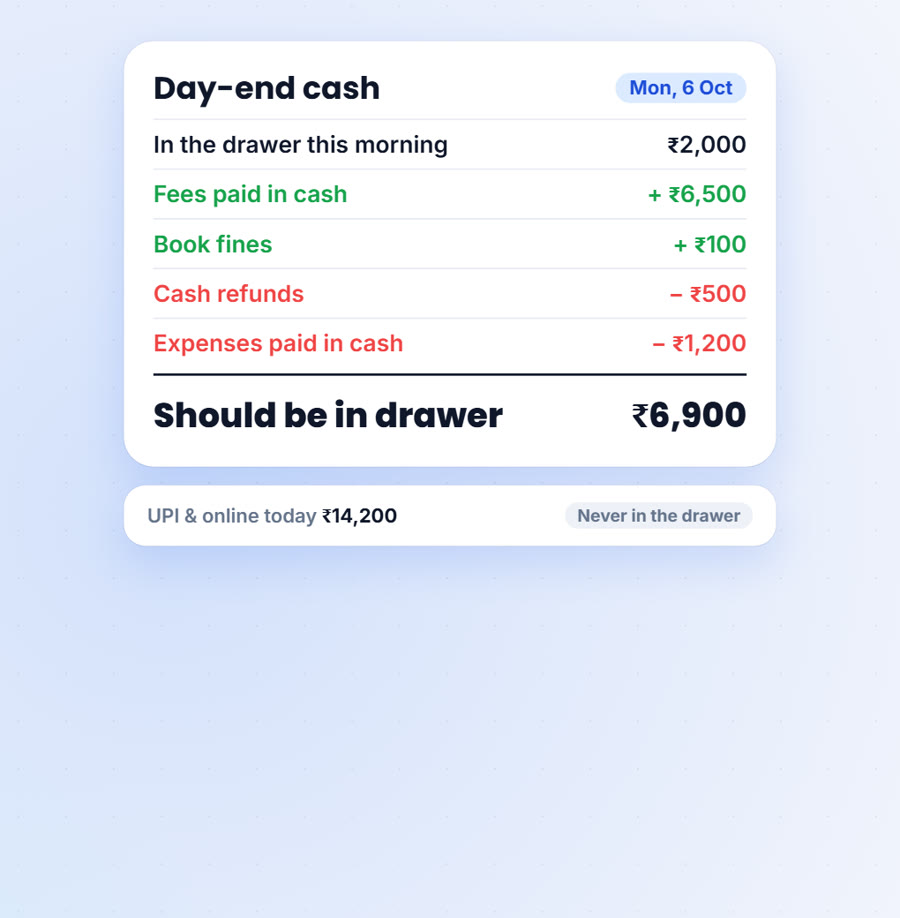
Start from what was in the drawer when the day began. Then add every amount of cash that came in and subtract every amount of cash that went out:
- In the drawer at the start. Usually what was kept back after yesterday's close.
- Plus cash in: seat payments taken in cash, advances, book fines, refundable deposits.
- Minus cash out: cash refunds, advances handed back, deposits returned, and the library's own expenses paid in cash.
The result is what the drawer should hold.
This only works if every cash movement is recorded when it happens. If staff pay for supplies from the drawer, enter the expense as paid in cash at the time. See our guide on tracking fees and outstanding balances for recording part payments correctly.
Step 2: Count the drawer
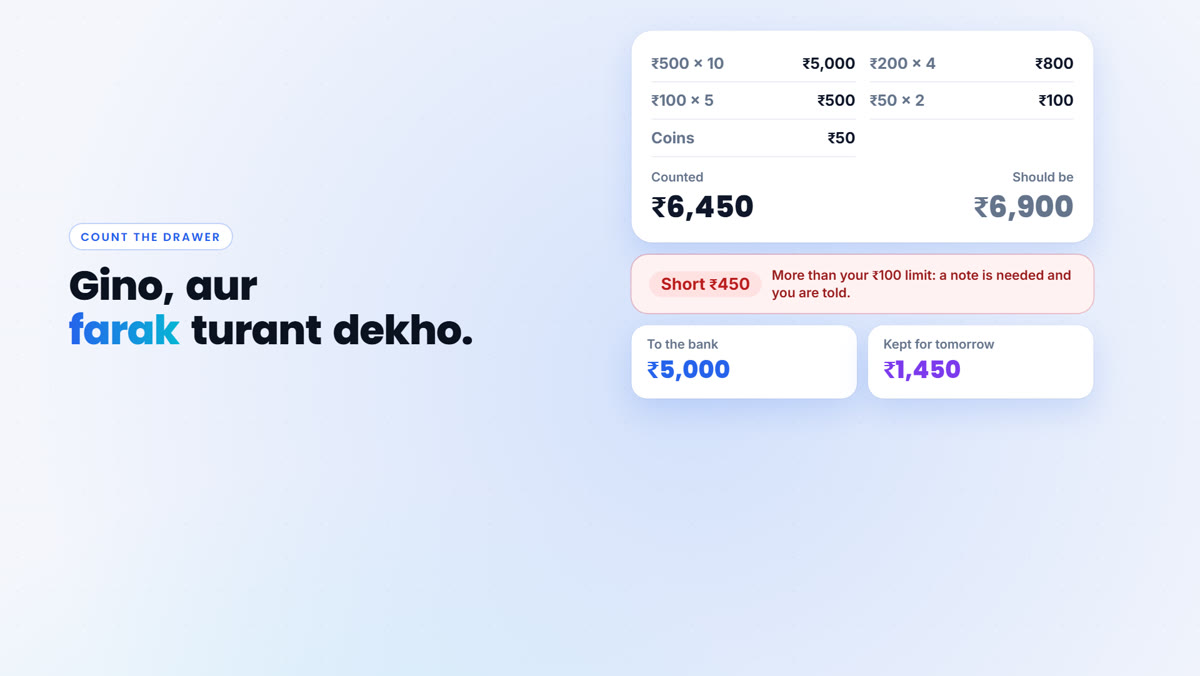
Count the notes and coins and write down the total. Counting note by note (how many ₹500s, ₹200s, ₹100s) takes a little longer but catches counting mistakes. Have the person closing the day do the count, and if possible a second person check it.
Step 3: Explain any difference
Compare the counted amount with what the drawer should hold:
- Matches, or the difference is very small: the day is closed.
- Short: money is missing. Check for an unrecorded expense, a refund given in cash but not entered, or a payment entered as cash that was actually UPI.
- Extra: usually a cash payment that was not recorded, or a refund entered but not given.
Set a small limit you are comfortable with, such as ₹100, so that a few rupees of change do not cause alarm. Anything larger should need a written note from the person closing.
Step 4: Decide what leaves the drawer
Record how much is taken out, for example to deposit in the bank or hand to the owner, and how much stays for tomorrow. Tomorrow's close starts from the amount kept, which keeps every day linked to the one before.
Doing it in Libzbook
In the Libzbook owner mobile app, open More → Day-end cash close. The screen shows What the drawer should hold: the amount in the drawer at the start, then seat payments, advances, book fines and deposits in cash, minus cash refunds, advances and deposits handed back, and expenses paid in cash. UPI, card and online money is not counted there.
Staff enter Cash counted and how much is taken out, and the rest is kept for tomorrow. The screen shows whether the count matches, is short, or has extra. You set the limit for an acceptable difference in the cash close rules: within it the day counts as matching, and beyond it a note is needed and admins are told. If nobody has closed a library's day by the evening, admins get a reminder. A closed day can be reopened to fix a mistake, and the earlier close stays in its history.
Who can close or reopen a day is a permission, so you can let the front desk close but keep reopening for yourself. Our guide to staff permissions covers how to set that up.
Make it a habit
A cash close works because it happens every day, not because the arithmetic is difficult. Fix a time, such as when the last shift ends, and a person responsible. Look at the closes once a week: frequent small shortfalls on one person's shifts, or extras that always follow busy days, tell you where your recording needs attention.
We make Libzbook, and the steps above describe how its day-end cash close works today. The illustrations use sample amounts; they are not screenshots of a real library.